You Can See Everything
/Thirty-four days before reporting to prison, disgraced former Theranos CEO Elizabeth Holmes does the insensible thing and invites a film crew into her life. With Nathan Fielder and Lance Oppenheim directing, the resulting documentary You Can See Everything – as revealed in its trailer – seems odd, provocative, and somehow feels both claustrophobic and as open as its title. While we are promised complete access, the core of the film trailer lies in its subject’s innate dubiousness.
We begin in medias res as Fielder, wearing a simple pair of headphones, casually questions Holmes while she’s in the middle of housework, with fairly even-handed questioning, especially considering the circumstances. Asked whether she really believes she did nothing wrong, Holmes simply replies, “I did not.” A synth bathes us in the sonic analog of morning light. “I don’t feel like I understand that,” Holmes says in response to being questioned about how she ended up with a prison sentence—and we see Fielder’s incredulity sink in.
At 0:21 the camera turns to itself, as Fielder begins questioning the documentary process itself: “Does any part of you worry about me being here? 24/7?” Again, Holmes demurs. When Fielder wonders aloud whether something might happen that casts Holmes in a negative light, we get a turn in the melody from major to parallel minor—a subtle but real inflection. The track in question is Felsmann + Tiley’s “Gabriel”, from their 2026 album Protomensch. Their independent British label, Mute, describes the duo’s approach in terms of drum-less synth wave and neoclassical minimalism, with the album exploring the relationship between people and machines. It’s a choice context for a portrait of a Silicon Valley fraud; the music feels carefully composed and constructed, which feels like a running commentary on Holmes’ public persona.
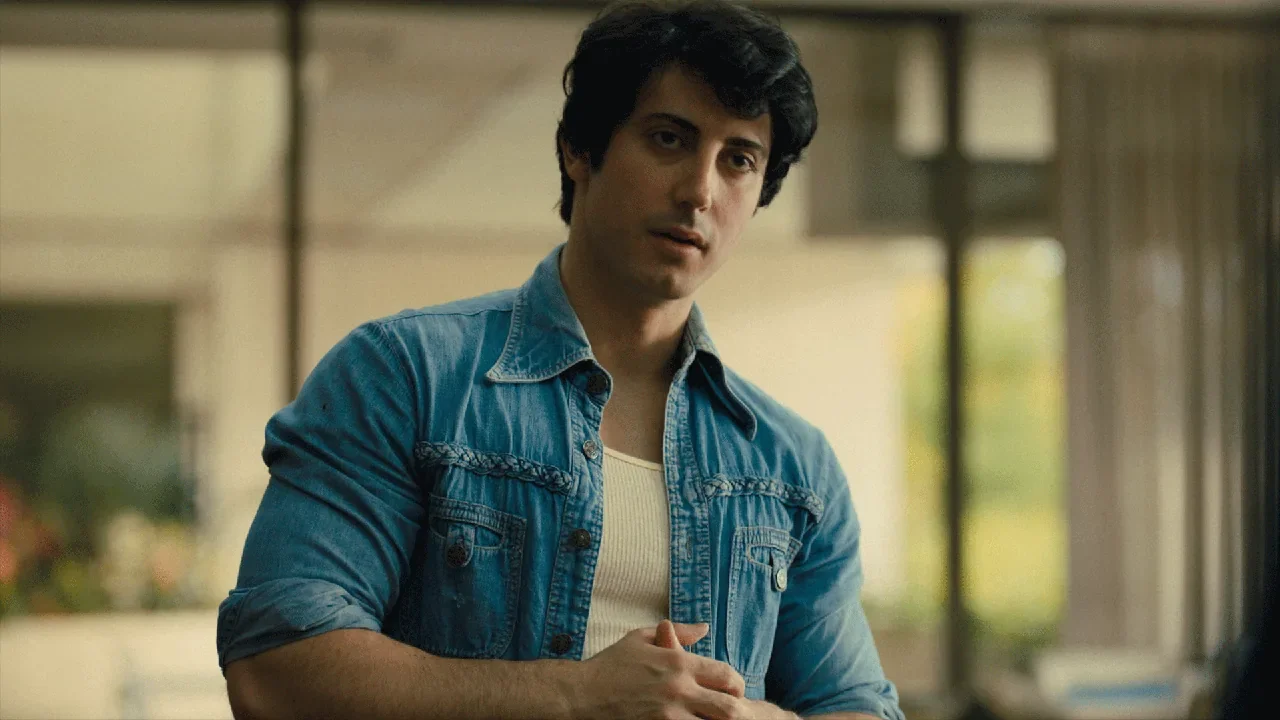
The next leg sees Fielder questioning Holmes’ partner, Billy Evans; heir to the Evans Hotels empire, he also rapidly folds under Fielder’s questioning. He deflects the issue of deception, instead offering there are “different levels of wealth” (cue the disturbing-sounding waterphone, in line with the cognitive dissonance on display).
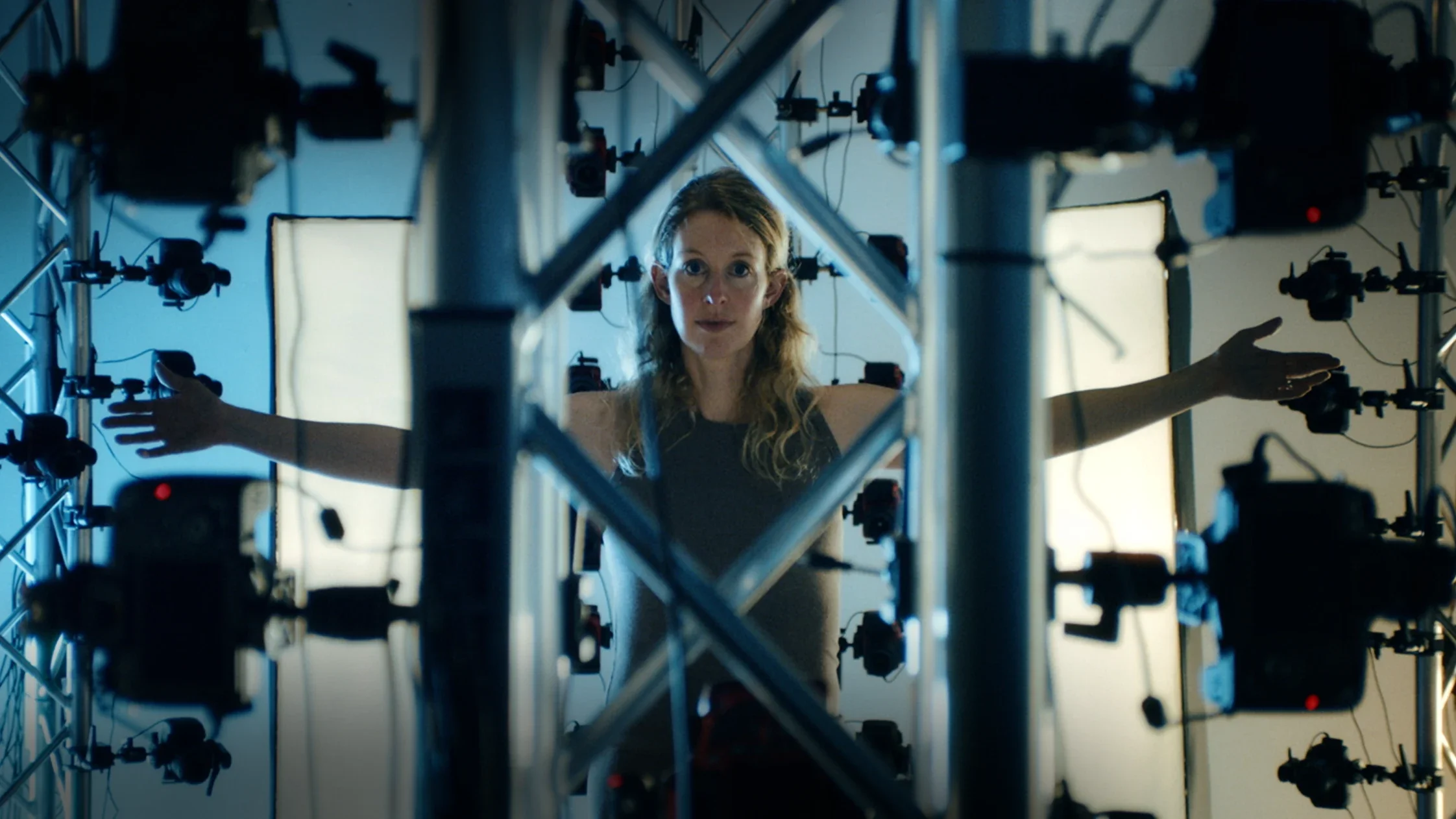
As the soundtrack ramps up, we get a little more of a montage spectacle, with glimpses of Holmes hooking up to what looks like some sort of comprehensive imaging machine, and more snippets of Fielder’s questioning (“you’ve never been suspicious that she’s ever lied to you?”). The rhythm section comes alive across the tonal spectrum along with pulsing, almost writhing synths, paired well with much more dramatically lit scenes. The video is then cut to the pulse, dramatically shifting back and forth on the beat between closeups (e.g. a Theranos barcode, a side profile of Holmes’ eyes) and snippets of critics’ glowing appraisals.
The lingering synths skittering away contrast with the idyllic scenery at 1:51, only reinforcing the unsettling feeling that permeates the entire trailer.
We’re not off the hook yet, however. One last close-up of Holmes showcases her ability to cry on command—with a well-placed guttural sound that, in light of all that precedes it, renders those tears calculated—as she faces the camera, about to go to prison. As documentary trailers go, this one earns the word visceral.
A24 lists You Can See Everything for theatrical release on October 16, 2026.
— Curtis Perry